This trip was supposed to take us to Mana Pass, one of the highest roads near the India-China border. That was the idea when my brother Vaibhav and I left Delhi in the middle of the night. We had no detailed itinerary, but we believed that once we reached Badrinath, we would somehow arrange the permission and continue beyond Mana Village towards the pass.
The permission never happened. Instead, the failed plan took us to Badrinath Temple, through India's first village, up to Vasudhara Falls and then onto two days of trekking through Ghangharia, the Valley of Flowers route and Hemkund Sahib. We climbed through the darkness before sunrise and took a dip in water so cold that my hands could barely button my shirt afterwards. It was not the journey we had planned, but it became a much bigger experience than either of us had expected.
A Plan Made At Midnight
The journey began almost casually on the night of September 16, 2026. Vaibhav was originally thinking of riding alone to Badrinath and then continuing towards Mana Pass. Once we started discussing the route, the plan slowly changed. Instead of him taking the bike, we decided that both of us would go together in the Virtus.
Mana Pass was the part that made the trip exciting. It lies beyond Mana Village, close to the India-China border, and visiting it required official permission. We searched online and tried to understand the process, but the information was unclear. Some people said permission could be arranged after reaching there, while others said we would have to visit the SDM office in Joshimath.
We did not have a definite answer, but we decided to leave anyway. At around 1 AM, after packing our clothes and the things we needed, we started driving from Delhi towards Badrinath.
That uncertainty became part of the trip from the very beginning. We knew where we wanted to go. We just did not know whether we would actually be allowed to reach it.
Into the Mountains
Around 5:13 AM, we were already above Rishikesh near Dhunar Gaon. Vaibhav had been driving through the night. The road was beginning to enter the mountains, and from that point onward, the journey became a mix of winding roads, short stops and changing views.
We continued towards Joshimath while still trying to understand the Mana Pass permission process. The opinions remained mixed, and even the online registration we found was only for Badrinath Dham. I registered both of us for the temple visit, but Mana Pass was still uncertain.
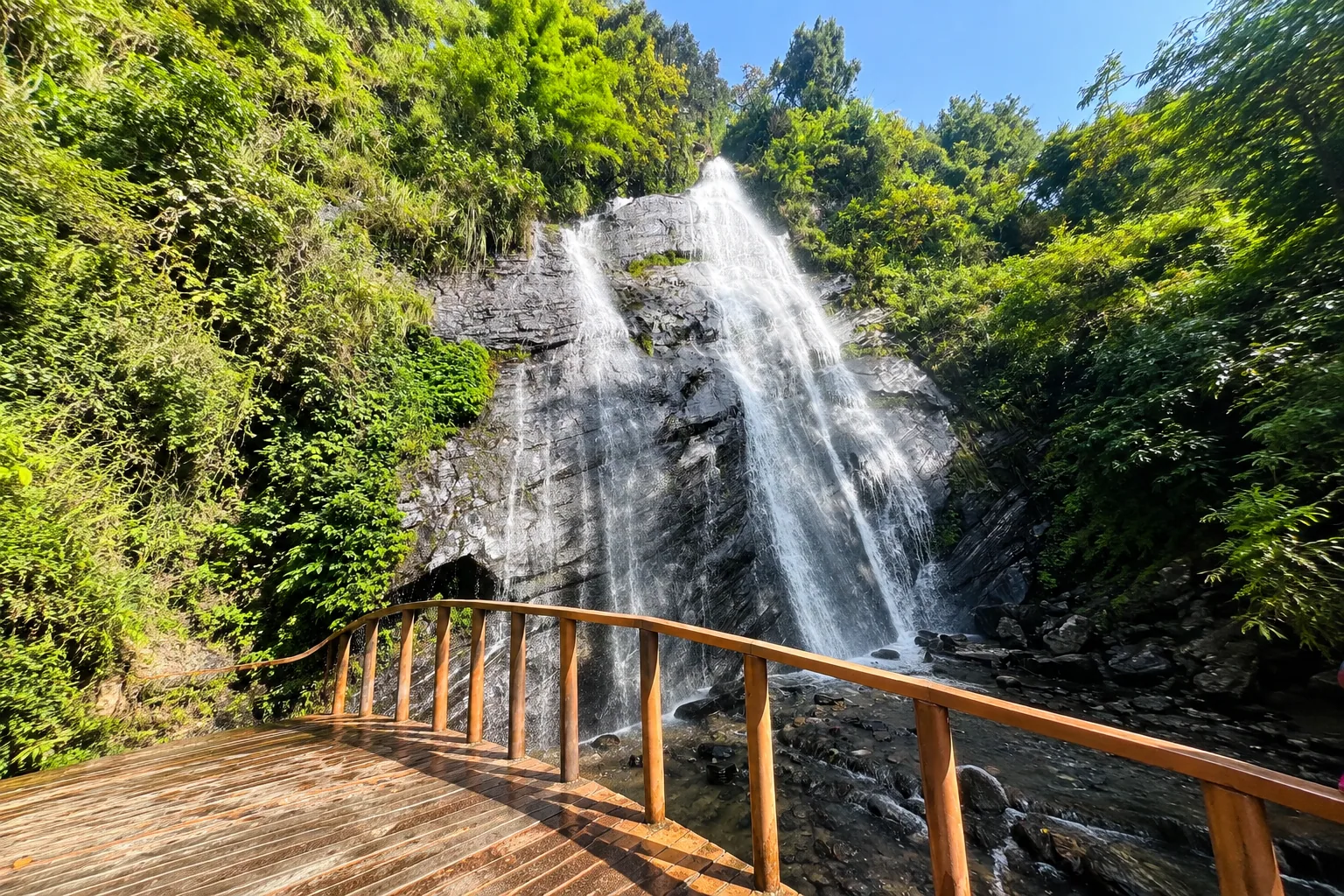
At around 3 PM, we stopped near Jogidhara Waterfall below Joshimath. It was the first place on the journey that made us stop simply because of how beautiful it looked. The waterfall, the mountains and the road around it felt like the real beginning of the trip.
After another short halt, I took over the driving. By around 5:45 PM, we had finally reached Badrinath.
Badrinath At Night
Finding a room took some time because several hotels were already full. Eventually, we found a room at Hotel Venkatesh, left our luggage there and stepped out on foot at around 8 PM.
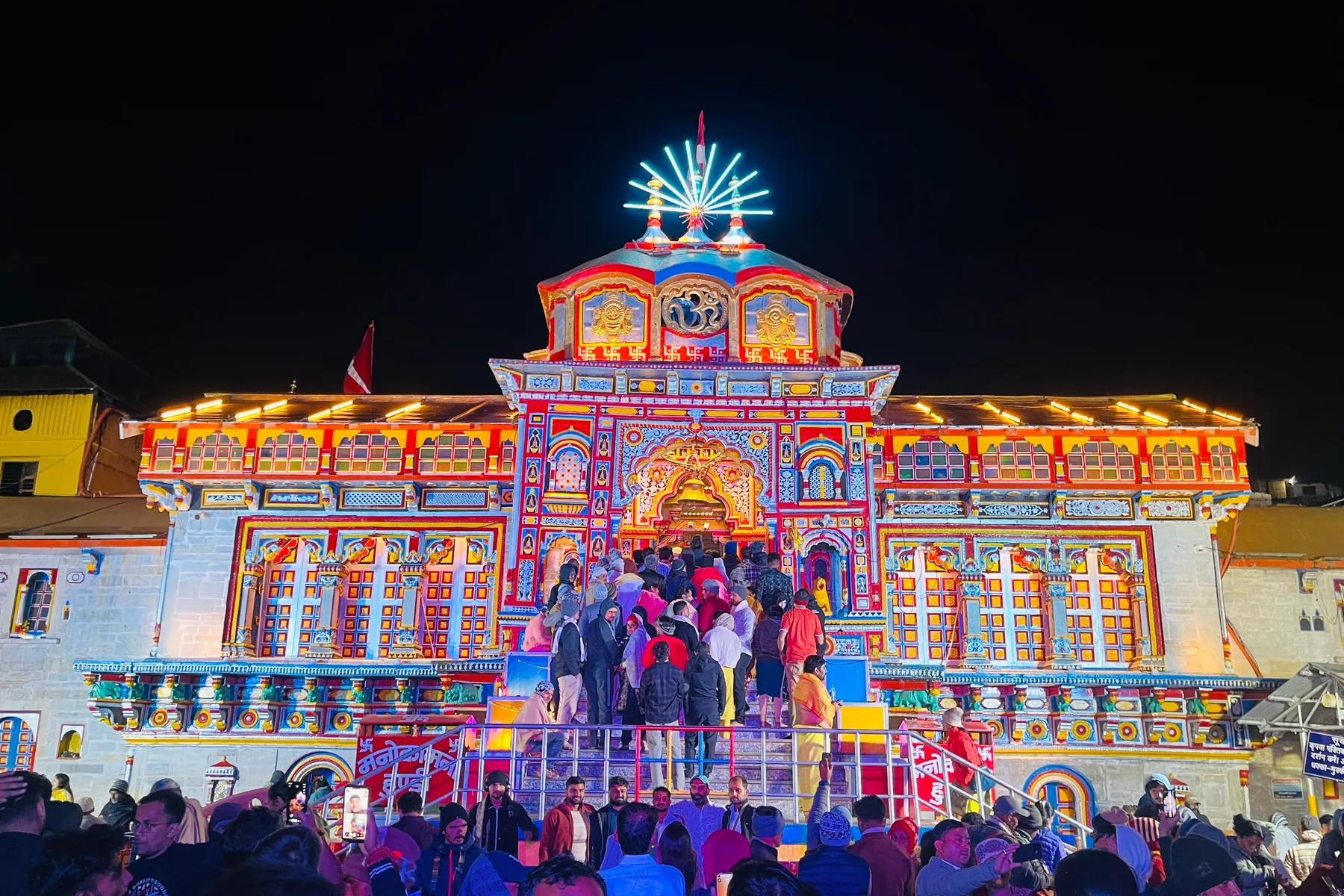
Badrinath felt lively even at night. The roads were well lit, people were walking through the market and the temple side had the energy of a pilgrimage town that was still wide awake. As we moved further inside, the temple slowly came into view.
At around 8:30 PM, we had darshan at Badrinath Temple. We also video-called our mother and grandmother so they could see it with us. After spending so many hours on the road, standing in front of the temple made the sudden trip feel real.
Near the temple was Tapt Kund, where people were bathing in naturally hot water despite the cold mountain air. The contrast was strange to watch: everyone outside was wrapped in warm clothes, while people inside the kund were standing comfortably in water that looked almost too hot to enter.
We walked through the market for a while before returning to the hotel. Badrinath was only supposed to be the first stop before Mana Pass. By the next morning, however, we finally understood that the original plan was not going to happen.
After the darshan and the walk through Badrinath, we returned to Hotel Venkatesh. The long overnight drive from Delhi had finally caught up with us, and after settling into the room, we went to sleep. That brought our first day in the mountains to an end.
The Mana Pass Plan Ended Here
On the morning of September 18, we asked more local people about the route and permission. This time the answer became clear: reaching Mana Pass required proper advance planning and permission from the SDM office in Joshimath. It was not something we could arrange casually after arriving in Badrinath.
For a moment, it was disappointing. Mana Pass had been the reason the trip started, and now we were only a short distance from Mana Village but could not continue to the place we had imagined.
Still, we were already surrounded by some of the most beautiful mountains we had ever seen. Instead of treating the failed permission as the end of the journey, we changed the journey.
We checked out of the hotel and, at around 12:15 PM, started driving towards Mana Village.
Mana: India's First Village
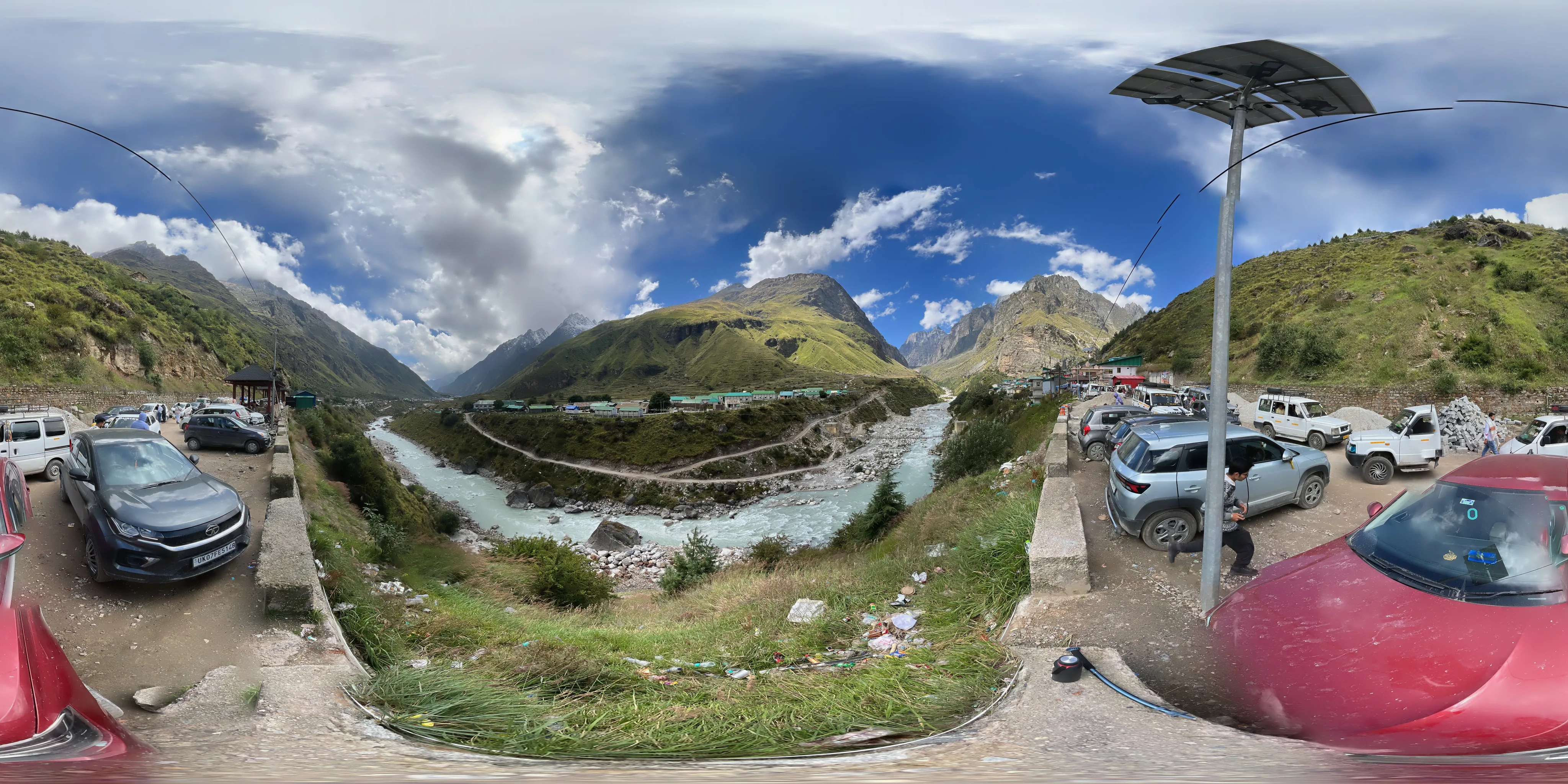
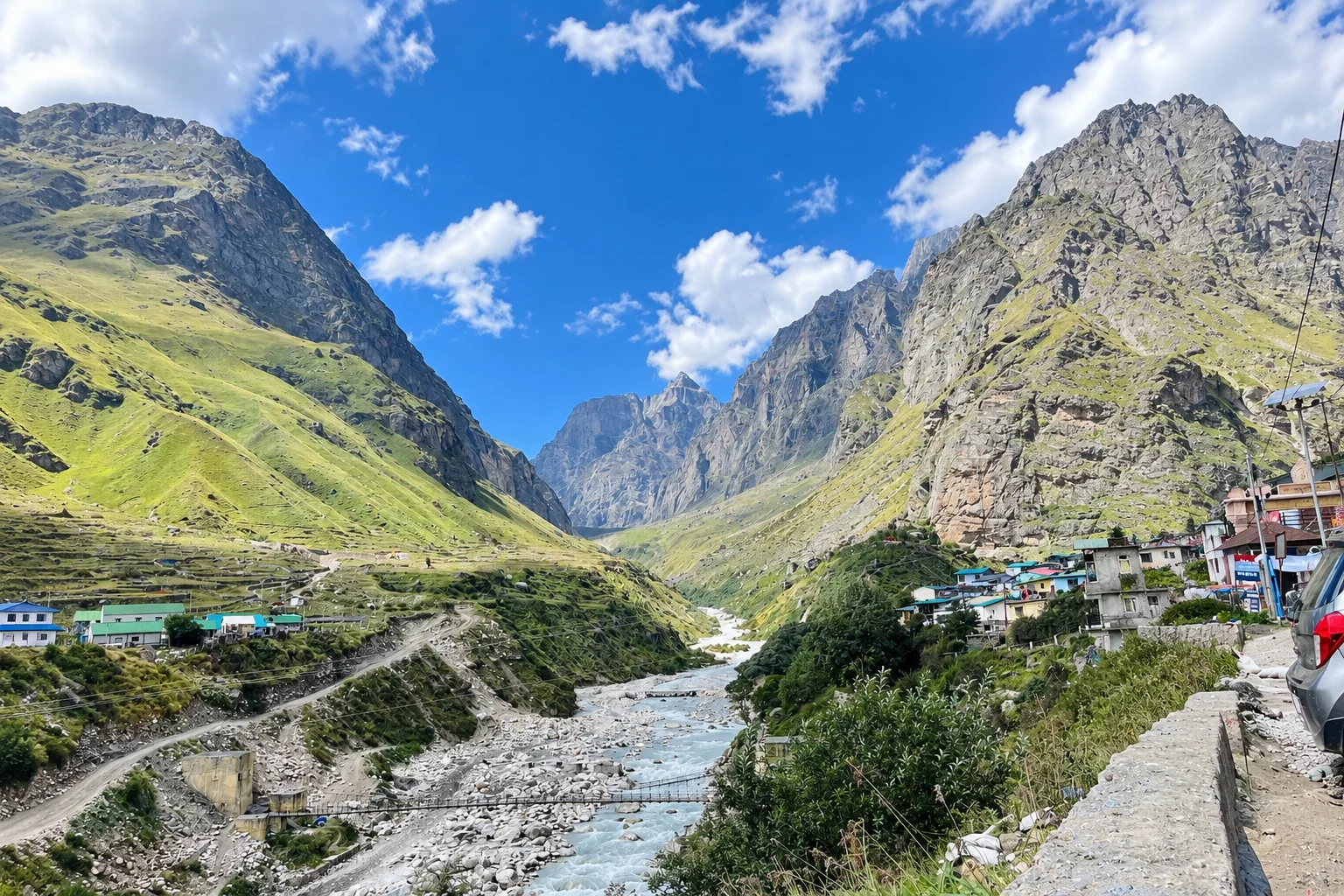
Mana was only a short drive from Badrinath, but the scenery made it feel like we had entered a different part of the mountains. High peaks rose on every side, the river below looked almost white and the entire valley felt open, cold and dramatic.
Mana is known as India's first village, and even though it sits so close to the border, it was full of visitors and small shops. We parked the car and started walking further into the village. Our destination now was Vasudhara Falls.
Reaching the waterfall required a trek of several kilometres. As we left the busy part of Mana behind, the path became quieter and the mountains began to dominate everything around us. There was no longer any road ahead, only the trail, the river and the high Himalayan landscape.
The Trek To Vasudhara Falls
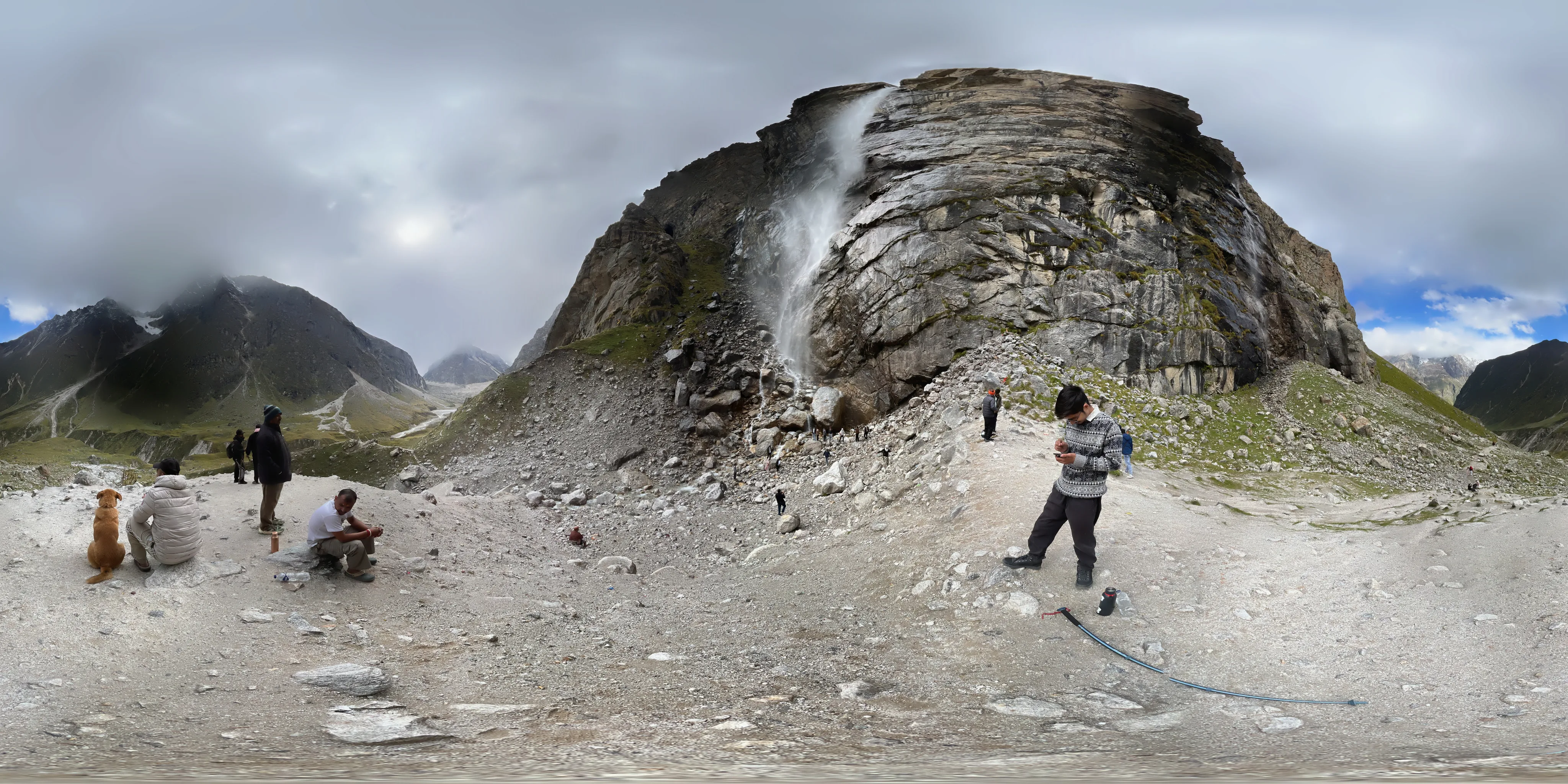
It took us around two and a half hours to reach Vasudhara Falls. The climb was tiring, but the view at the end made the effort worth it. The waterfall dropped from the mountain in front of us, the wind carried cold spray through the air and huge peaks stood all around the valley.
It was the kind of place where photographs never completely show the scale. Standing there, the waterfall looked powerful, the water was freezing and the whole landscape felt untouched.
We stayed for some time, took photographs and videos and simply enjoyed being there. The previous evening, we had met a foreign traveller standing in the hot water of Tapt Kund. Somehow, we met the same person again at Vasudhara, this time bathing under the freezing waterfall. Seeing him move from one extreme to the other was one of the funniest small memories of the trip.
After spending some time near the falls, we began the descent and returned to Mana in around two hours. By approximately 5:30 PM, we were back in the car.
One Failed Plan Created Another
We still had time, and neither of us wanted the journey to end with the Mana Pass plan cancelled. While driving back, we decided to attempt something else: the trek to Hemkund Sahib.
About an hour later, we reached Govind Ghat and took a hotel room for the night. Around five minutes from our hotel was Gurudwara Sahib Sri Gobind Ghat, which we visited later that evening. Shared taxis for Pulna also leave from near the gurudwara.
Pulna is the last point on this route that can be reached by vehicle. Beyond it, there is no road transport. Travellers either walk or use mules on the mountain trail. From Pulna, we would first trek to Ghangharia and stay at Gurudwara Sahib Sri Gobind Dham. The Valley of Flowers trail begins only a few minutes from that gurudwara, while Gurudwara Sri Hemkund Sahib is another steep four-to-five- hour trek above Ghangharia for most visitors.
After visiting Gurudwara Sahib Sri Gobind Ghat, we prepared for the trek. We had brought more luggage than we could carry through the mountains, so we packed only the essentials into two bags and left everything else safely in the car.
Until that evening, Hemkund Sahib had not even been part of the trip. Now it had become the main destination.
We returned to our hotel in Govind Ghat, arranged the two bags we would carry and moved everything else into the car. By around 12:30 AM, the route for the next morning was clear and we finally went to sleep. The day that had begun in Badrinath had taken us through Mana and Vasudhara Falls before ending in Govind Ghat.
The Climb To Ghangharia
We woke at around 4 AM on September 19, checked out and left the car near Gurudwara Sahib Sri Gobind Ghat. My leg was still hurting slightly after the Vasudhara trek, so I visited the gurudwara's dispensary before leaving. The person there quietly gave me medicine and refused to take any money. It was a small moment, but it was my first real experience of the selfless service that would stay visible throughout the rest of the journey.
We took a shared taxi to Pulna, the final point accessible by road, and began walking at around 6:30 AM. From there, everything needed to move on foot or by mule.
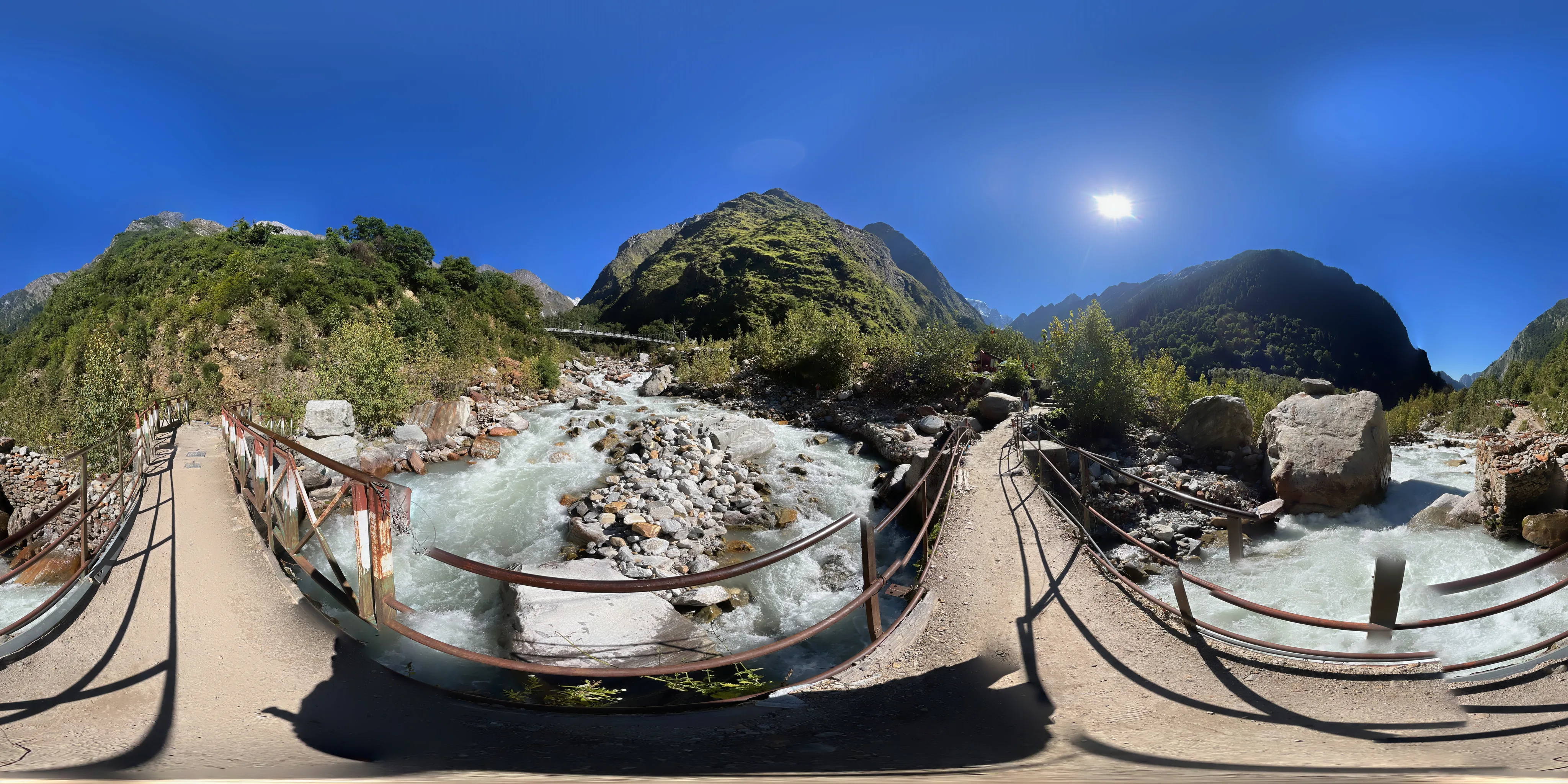
The trek climbed steadily beside rivers, waterfalls and steep mountain slopes. When we reached Bhuyndar, we came across a large, beautiful waterfall cutting across the trail. The water, the surrounding mountains and the narrow path made it one of my favourite views on the route. I had been taking 360-degree photographs at every place that stood out to me, so I captured this waterfall in 360 degrees too.
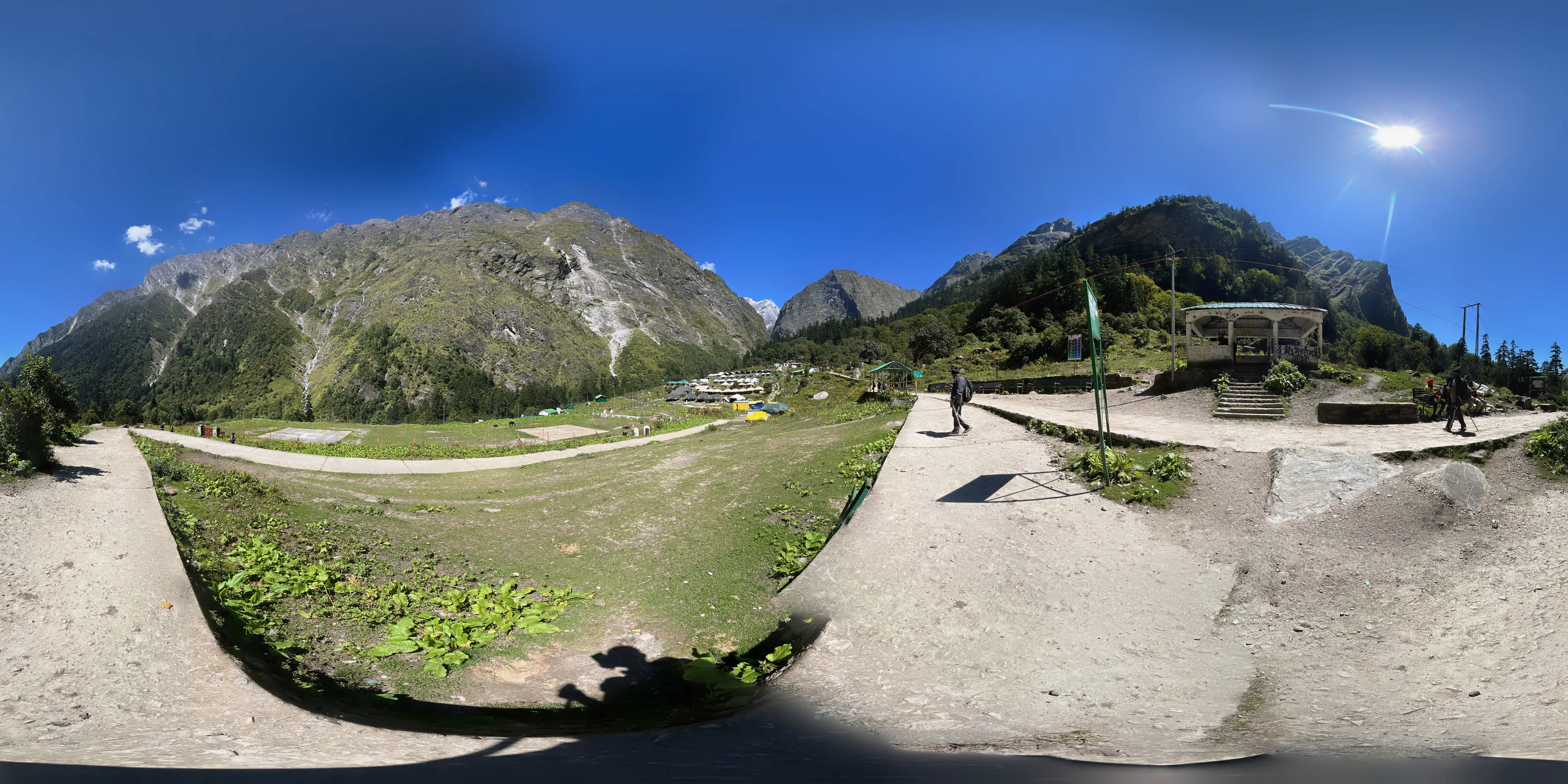
By around 11:15 AM, we reached the Ghangharia helipad. High mountains surrounded us in every direction, and after almost five hours of walking, the settlement felt like a small hidden stop in the middle of them.
The Gurudwara At 10,000 Feet
We reached Gurudwara Sahib Sri Gobind Dham in Ghangharia shortly afterwards and were given space in a dormitory. After trekking for almost five hours from Pulna, we kept our bags there, ate langar and finally sat down to rest. Our legs were tired from the continuous climb, and simply having a warm meal and a place to recover felt like a huge relief.
What surprised me most was the scale of the service at that height. Ghangharia stands at around 10,000 feet and lies beyond the last motorable road. Reaching it is difficult even for a traveller carrying a small bag, while almost every supply needed by the gurudwara has to arrive on foot or by mule.
Even in such a remote place, Gurudwara Sahib Sri Gobind Dham provided travellers with a dormitory, blankets, langar and hot tea without expecting anything in return. I kept wondering how they managed to arrange and serve so much at a place that was itself so difficult to reach. Experiencing that kind of seva so high in the mountains made a strong impression on me.
The Valley of Flowers
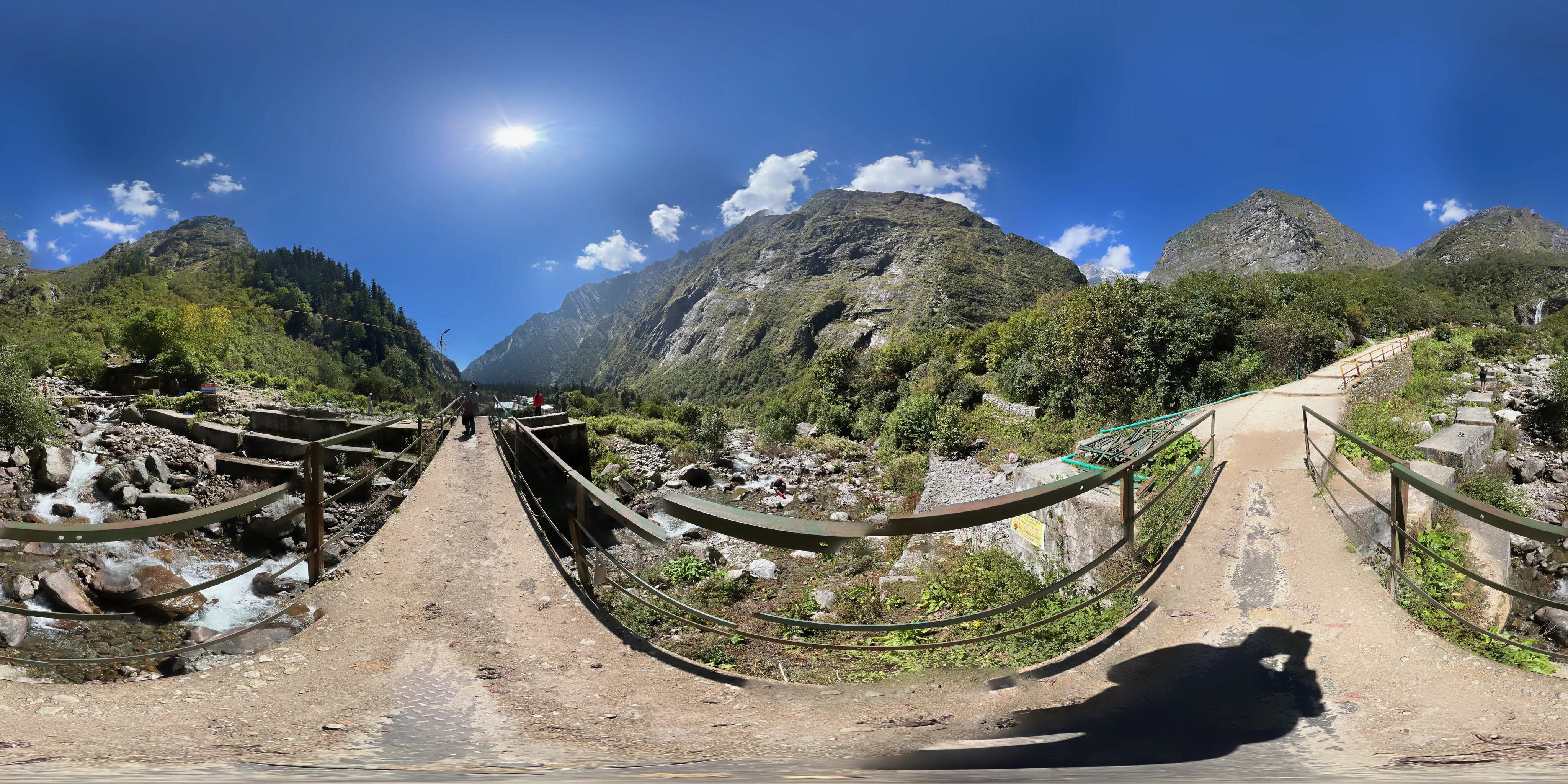
We decided to visit the Valley of Flowers. We started walking towards it and, after trekking for around 1.5–2 hours, we reached further inside the valley. However, once we got there, we realized that there were hardly any flowers at all.
Some people there told us that the Valley of Flowers is usually full of flowers during June, July, and August, when the rainy season brings the valley to life. But at the time we visited, there were almost no flowers, so the place looked quite different from what we had imagined.
After spending some time there, we decided to head back. It took us another 1.5–2 hours to trek all the way back, and we finally reached Ghangharia at around 5 PM.
By then, we were completely exhausted. We returned to our dormitory at Gurudwara Sahib Sri Gobind Dham and, with almost no energy left after the two treks, went to sleep. That ended our September 19 in Ghangharia, with another steep climb waiting for us before sunrise.
Walking Through The Darkness
At around 4:30 AM on September 20, we left Ghangharia for Hemkund Sahib. We placed one bag in a locker and carried only what we needed because the trail ahead was much steeper than the climb from Pulna.
It was completely dark when we started. For the first part of the trail, we walked using the torch on our phones. There were no views yet, only the path visible in front of our feet and the feeling of climbing higher with every turn.
As the sun slowly began to rise, the mountains appeared around us. What had been darkness gradually became one of the most beautiful parts of the trip. The peaks caught the early light, the air became clearer and the scale of the climb finally became visible.
The trail offered almost no flat section. We kept a steady pace, took short breaks and continued upwards without trying to rush. After around three hours of climbing, we finally reached Hemkund Sahib at approximately 7:30 AM.
Finally, Hemkund Sahib
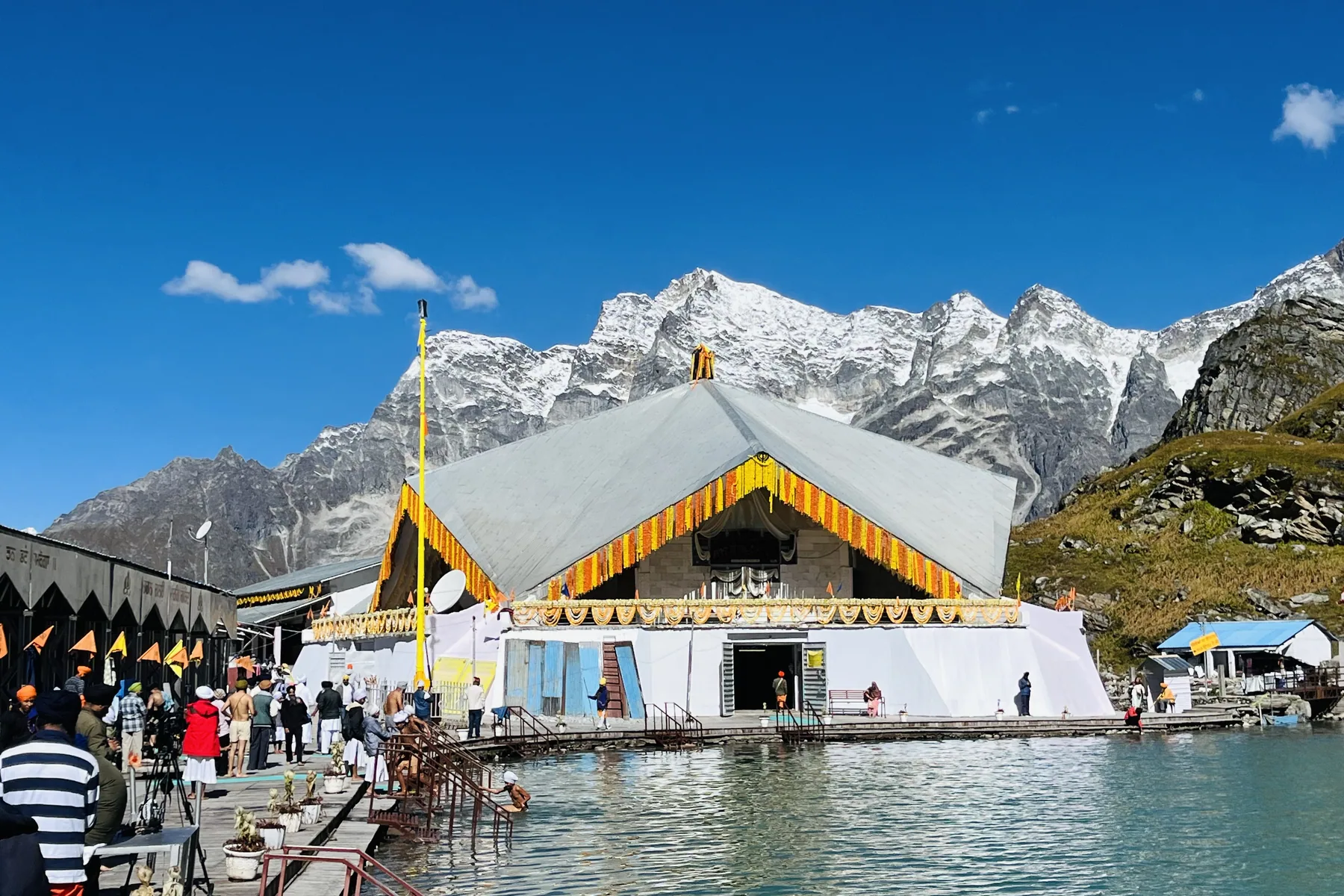
The first view of Gurudwara Sri Hemkund Sahib made the entire climb worthwhile. The gurudwara stood beside a vast glacial lake, surrounded by mountains. At that early hour, there were still relatively few people around, and the place felt quiet, cold and almost separate from everything below.
We had been told that taking a dip in the lake held religious importance. The temperature outside was somewhere around 8 to 10 degrees, while the water felt close to freezing. Vaibhav entered first and almost lost his balance because of the shock of the cold.
Then it was my turn.
The moment I stepped into the water and took the first dip, my entire body seemed to freeze. I took a second dip and came out as quickly as I could. My hands and feet had gone so numb that I could barely button my shirt. For a while, it genuinely felt as if my feet were no longer responding properly.
It took around half an hour, some sunlight and a hot cup of tea before the feeling slowly returned. We ate khichdi at the langar, sat in the sun and watched more pilgrims arrive after completing the same steep climb.
The Quiet At The Top
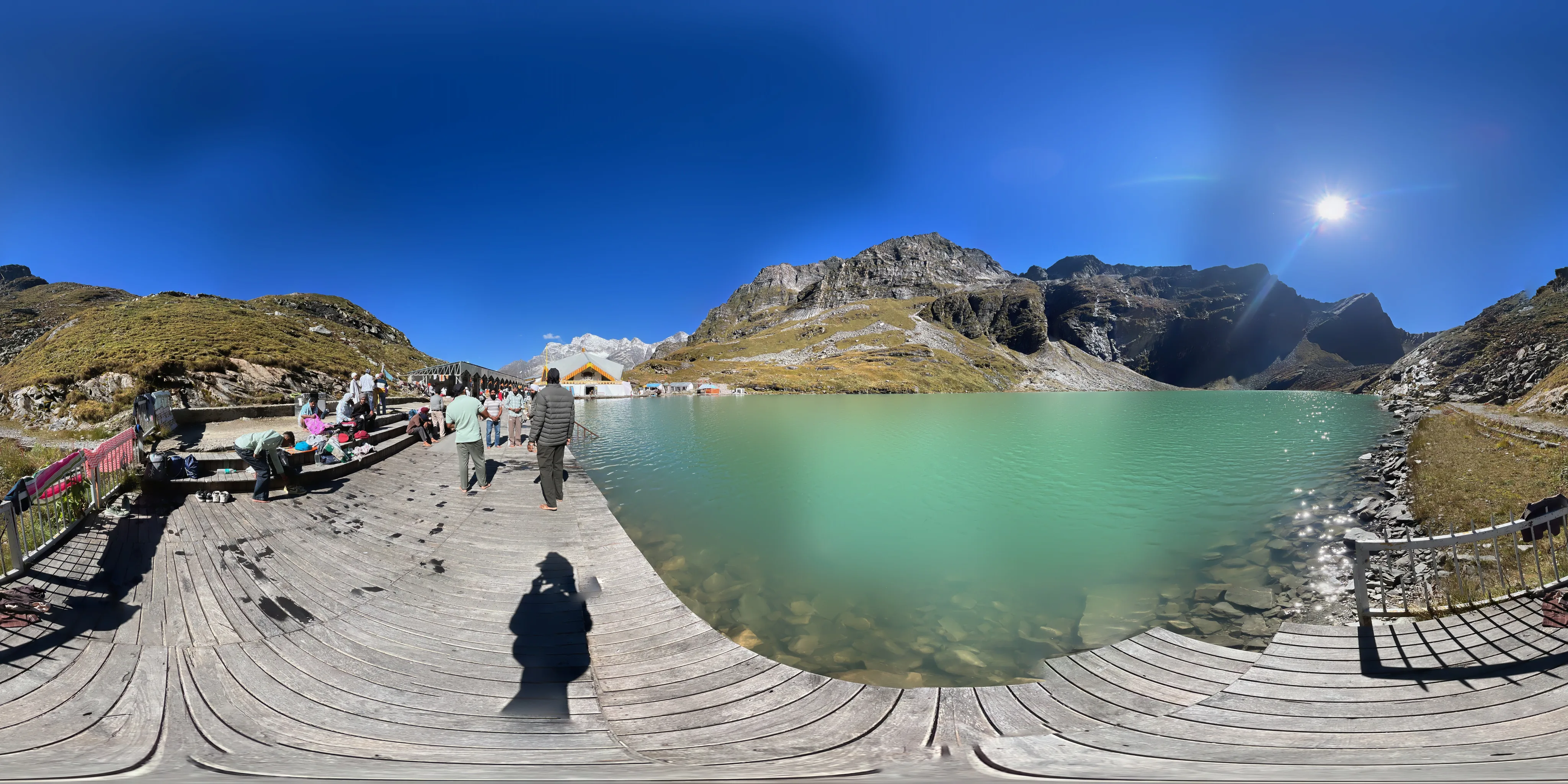
Once I had recovered from the cold, we spent a long time around the lake and the gurudwara. We took photographs, recorded videos and captured the place in 360 degrees. We also went inside the gurudwara and joined the ardas.
What stayed with me most was the contrast. The trek had been physically demanding, the water had been almost painfully cold and the altitude made every climb harder. Yet after reaching the top, everything felt still.
Only a few days earlier, we had been thinking about an entirely different destination. Hemkund Sahib had entered our plan only because Mana Pass had become impossible. Standing beside the lake, it was difficult to feel disappointed about that anymore.
At around 9:50 AM, we finally started walking back towards Ghangharia.
The Long Way Back Down
Descending was faster, but it was not easy. The steep slope made our feet slide forward inside our shoes, and every step placed more pressure on our legs. Even so, we reached Ghangharia in around two hours.
We ate langar, rested briefly, collected our second bag from the locker and began the longer descent towards Pulna at around 12:45 PM. By then, our legs had already completed the Hemkund climb and descent, but several more hours of walking still remained.
At around 4:15 PM, we finally reached Pulna. We waited for the shared taxi to fill and returned to Govind Ghat at around 5 PM, where the Virtus had been parked for the previous two days.
From there, we began the drive home. After the mountain roads, two major treks and several nights of limited sleep, the return journey was exhausting. We took turns driving through the night and finally reached home at around 7:30 AM the next morning. Only after parking the car and stepping back inside home did September 20 finally feel complete.
Looking Back
When I look back at this trip, the strange thing is that its main destination is the one place we never reached.
Mana Pass was the reason we left Delhi. We imagined driving beyond Mana Village, reaching the high border road and seeing a part of the Himalayas that very few travellers get to visit. But without the required permission, that plan ended before it properly began.
What followed was completely unplanned. We visited Badrinath at night, walked through Mana Village, trekked to Vasudhara Falls, changed our route to Govind Ghat, climbed to Ghangharia, followed the Valley of Flowers route and then started for Hemkund Sahib in complete darkness.
The journey eventually came to revolve around four places: Badrinath, Mana, the Valley of Flowers and Hemkund Sahib. None of that had been part of a detailed itinerary when we left Delhi, but each stop gave the trip a different experience.
I remember the scale of the mountains around Mana. I remember the cold wind at Vasudhara Falls. I remember the waterfall crossing on the way to Ghangharia, the generosity at the gurudwaras and the first sunlight appearing while we climbed towards Hemkund Sahib.
Most of all, I remember that freezing lake.
My Experience
This was one of the most physically demanding trips I had taken. We completed the Vasudhara Falls trek, climbed from Pulna to Ghangharia, went from Ghangharia to Hemkund Sahib and then walked all the way back down within a very short time.
Across Vasudhara Falls, Pulna, Ghangharia and Hemkund Sahib, we covered well over 40 kilometres on mountain trails. These were not flat road kilometres. Much of the distance was steep climbing or descending, often while carrying our bags, which made the total effort feel much greater.
The trek showed me that Vaibhav and I had more stamina than I had expected. We reached Ghangharia and Hemkund Sahib faster than the usual times people had told us, but the journey never felt like a race. The real reward was being able to stop, look around and experience those places together.
The trip also changed the way I looked at gurudwaras and seva. Whether it was receiving medicine at Gurudwara Sahib Sri Gobind Ghat, finding a place to sleep at Gurudwara Sahib Sri Gobind Dham or being served hot food and tea at Gurudwara Sri Hemkund Sahib, help was available without any expectation in return. At that altitude, where even bringing basic supplies is difficult, that service felt extraordinary.
I still want to visit Mana Pass someday, this time with the permission arranged properly. That remains the one part of the original plan that this journey left unfinished.
But I would not call this trip incomplete.
It simply became a different journey.
We left Delhi hoping to reach Mana Pass.
We never reached it.
Instead, the road gave us Badrinath, Mana Village, Vasudhara Falls, Valley of Flowers and a sunrise climb to Hemkund Sahib.
Sometimes the destination that refuses to open is the reason you discover a better journey.